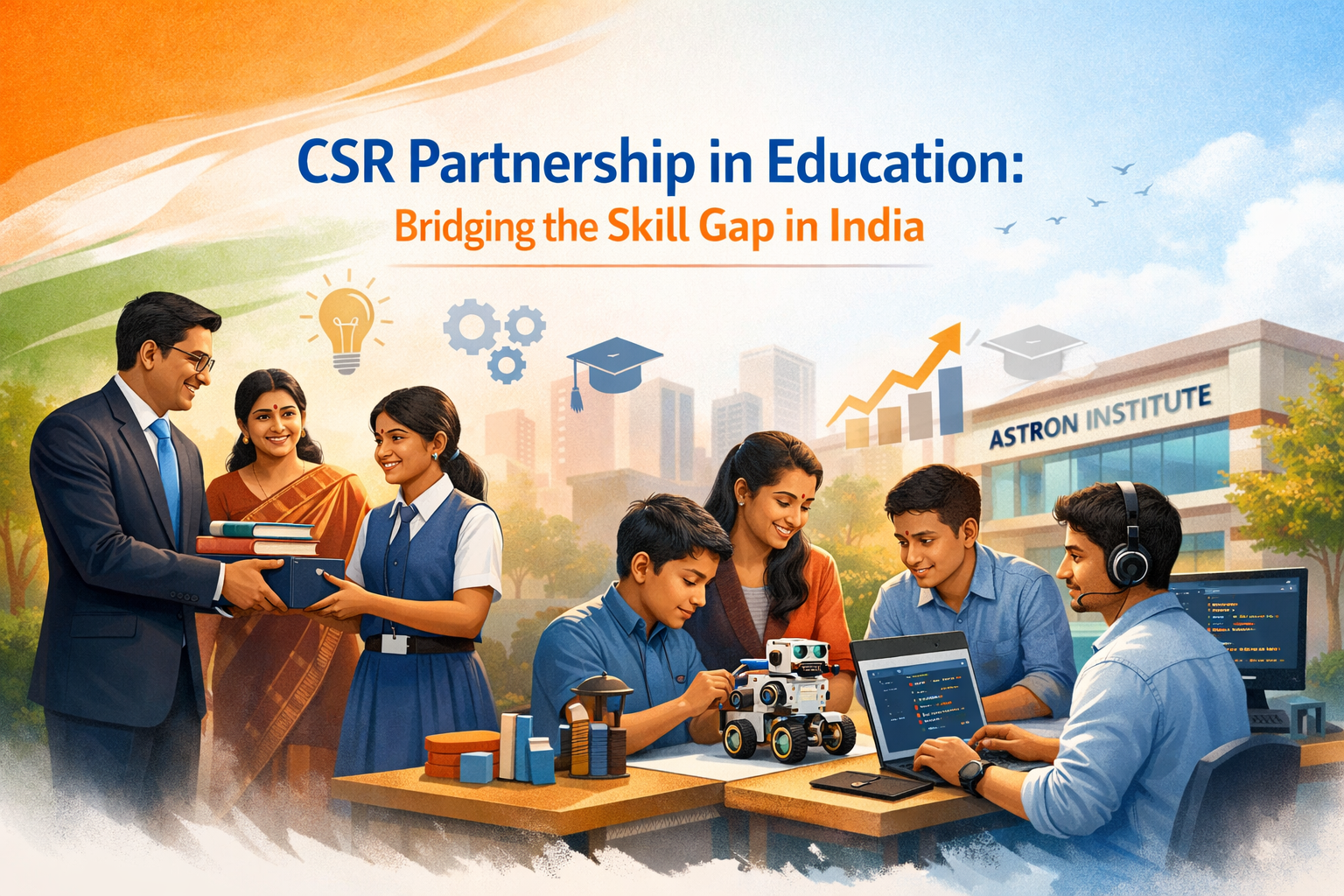
The education is significant in preparing the future workforce of any nation. Nevertheless, the problem of disconnect between the academic knowledge and industry needs is an acute issue nowadays in many industries. This is where CSR partnership programs are having impact. In an sensitive economy such as India, corporate participation in education is making students to acquire some practical skills, exposure in industry and improved opportunities to get employment.
Understanding the Skill Gap Challenge
The reason many of the graduates are unable to secure employment is due to the unavailability of job-ready skills and not due to uneducated graduates. The conventional education system is usually more theoretical than practical. An effectively designed CSR partnership is a way of filling this gap by bringing on board skill based training initiatives, vocational education and industry exposure.
Businesses get to know about the talent they require in the new workforce. They can work with schools to create programs that conform to the actual industry requirements.
How CSR Partnership Supports Skill-Based Education
A well-developed CSR relationship between corporates, NGOs, and education institutions, would result in several changes to the education system. Companies often invest in:
- Skill development centres
- Digital learning infrastructure is possible through:
- Training in the industry workshops.
- Apprenticeship and internship.
- Teacher training programs
Such programs make students ready to face the actual employment situations instead of merely academic tests.
Role of Corporate in Education Development
Corporate organizations possess funds, technical skills, and an understanding of the industry. They would be able to contribute to the improvement of the facilities and curriculum of educational institutions with the help of a systemic CSR partnership.
Numerous firms are sponsors of technical labs, industry tools and along with certification programs. This will ensure that students are more confident and employable. It is also used to enable industries to develop a pipeline of future ready work force.
Supporting Rural and Underprivileged Communities
The key benefit of a properly designed CSR partnership is that it targets under-served regions. A lot of rural areas are yet to enjoy quality education and skill training. Education programs sponsored by corporations allow students in these regions to have equal rights to learn.
Through scholarships, online classes and vocational training programs, students with less strong backgrounds are becoming job ready.
Promoting Digital and Technology Skills
It has become a requirement that digital skills are used in industries. A large number of programs under CSR partnership are based on digital literacy, coding skills, and education with technology. Firms usually offer computers, access to software and training modules.
This is particularly significant since online knowledge enhances the chances of employment in areas such as IT, e-commerce, finance, and services.
Academia Benefits in the Industry
In the case of CSR partnership, there is a win-win between the companies and the educational institutions. Industry knowledge and financial assistance is provided to colleges. Organizations are receiving trained talent.
This is also helpful to the students as they get to be exposed to business environments. This narrows the gap of learning upon them joining jobs.
Impact of CSR Partnership in Education Measure
The contemporary CSR initiatives do not only involve expenditure but also quantification of outcomes. The outcomes that are tracked by companies include:
- Number of students trained
- Post-training rate of employment.
- Increased levels of digital literacy.
- Industry qualifications attained.
This will make sure that all CSR partnerships have quantifiable social and economic value.
Future of CSR Partnership in Education
Corporate and education institutions will have to collaborate to ensure the future of education. As robots and AI transform the labor market, lifelong learning will be required. Powerful CSR partnership programs will assist in developing adaptive learning systems and lifelong training of skill opportunities.
Conclusion
Skills and education are critical to economic growth and social development. Companies are assisting in the bridging of the academic education-industry requirements gap through organized CSR partnership programs. These partnerships are turning young people into job seekers, enhancing rural education, and making people digitally literate.
With the ever-changing nature of industries, CS8R-initiated education programs will be significant in developing a competitive and skilled human resource. CSR is not just a social responsibility to invest in education, but it is an investment in the national development in the long run.