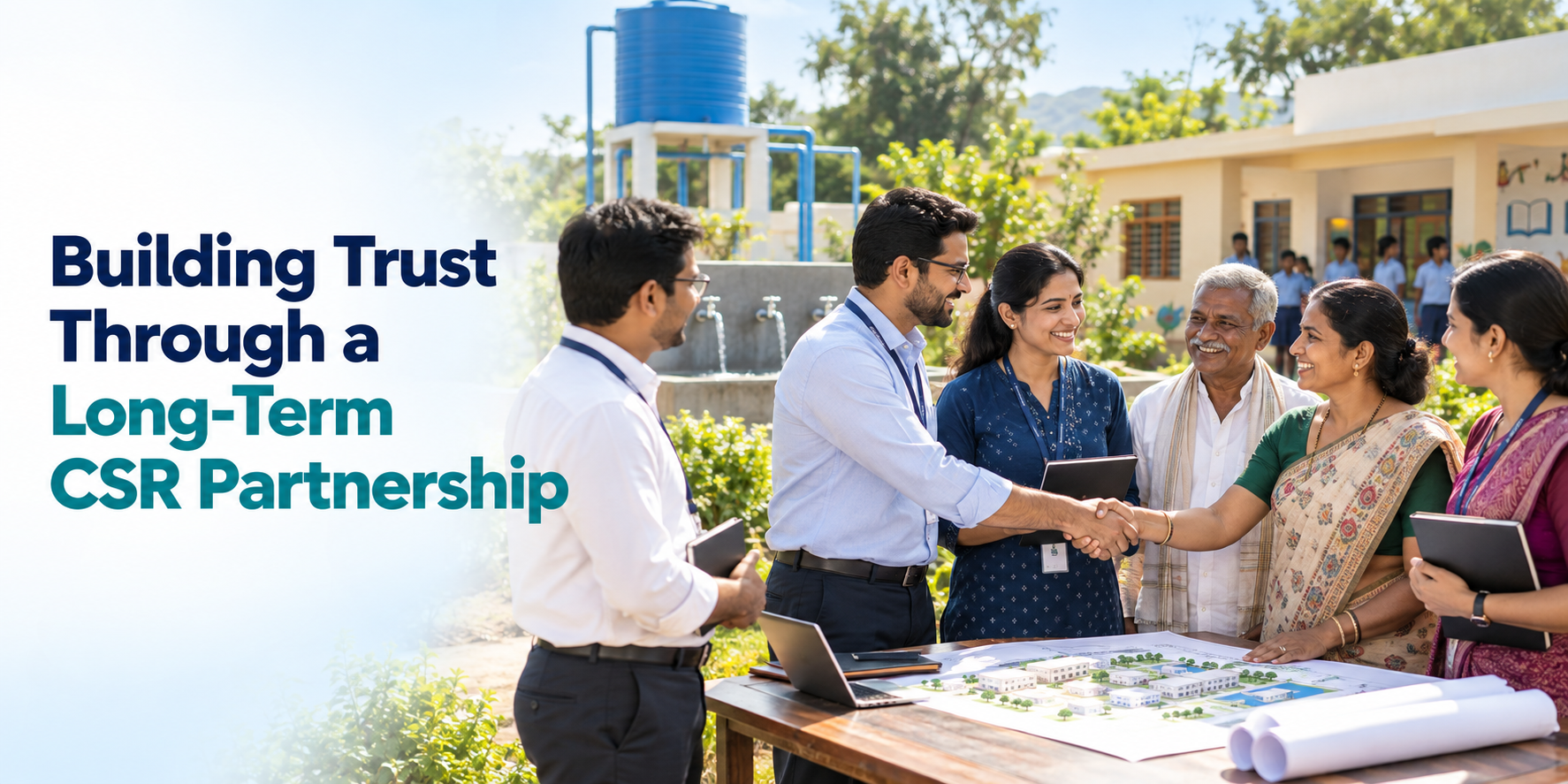
When companies are committed to a long-term approach about contributing to the community, they can make a real difference with their corporate social responsibility. An ongoing CSR collaboration between businesses and social groups can offer the stability required to grasp the needs of the community and how to enhance programs, and foster trust between stakeholders. Ongoing teamwork may also contribute to achieving measurable social outcomes in the long-term.
How to Build Community Consistency in Programs
There are many problems in the communities that can’t be solved with one campaign or one donation. Ongoing intervention and monitoring may be necessary in the areas of Education, Health Services, Child Welfare, Skill Development and Livelihood Support.
Organizations can design programs over a number of stages through a long-term CSR partnership. In addition to looking at specific needs, partners can look at larger goals and create activities that build towards these goals across a longer period of time. The uniformity can help to make social action more formal and receptive.
Better Knowledge of Community Needs
Trust is built when organisations show they know and value the people and communities they seek to serve. Long term engagement means there are more opportunities for engagement with beneficiaries, community representative, and local stakeholders.
By engaging in frequent field interactions and feedback, CSR partners can also detect shifts in needs and make necessary changes to their initiatives. For instance, an education programme could begin with access to learning resources and then move into teacher support and/or digital learning and/or vocational development depending on the community response.
Fostering Transparency and Communication
Partnerships between CSR and the company are successful when there is good communication. Objective, responsibility, timeline and expected outcomes should be clear and transparent to companies and implementing organisations.
Having a regular reporting system will give partners insight on how the resources are being utilised and what progress is being made. Issues can be discussed and resolved prior to their impact on the entire program by sharing challenges and successes.
To Measure Progress Over Time
Ongoing partnerships enable regular monitoring of social initiatives to assess them. Organisations can consider programs’ outputs not just measured in the short term, but also in the long run.
The indicators vary by project and can include school involvement, access to basic services, skill development, employment opportunities, community involvement, etc. Regular evaluations may assist partners in identifying what needs to be improved and tuning their effort.
Strengthening Community Participation
The relationship between an NGO and a company is not the only place where trust is required. It also entails the communities who are involved in CSR programmes. The longer the engagement, the more likely the beneficiaries are to be active partners in the engagement instead of just beneficiaries of the engagement.
Involving communities in program planning, implementation and feedback can help to ensure programs are more responsive to local needs. This involvement can be also helpful in establishing ownership and continuity.
Taking Proactive Measures to Make a Sustainable Impact
A partnership of CSR can be established on a long-term basis, and serve as a basis for more sustainable social initiatives. Financial and professional resources may be contributed by companies, and implementation partners may have field experience and community connections, as well as local knowledge of the challenges.
The objective is not to keep the same program for years but learn, adapt and improve as community needs change. If the goals are the same, the communication is clear and regular evaluation of performance is carried out, then the long-term CSR collaboration can be structured and developed into a long-term process for generating social value.