
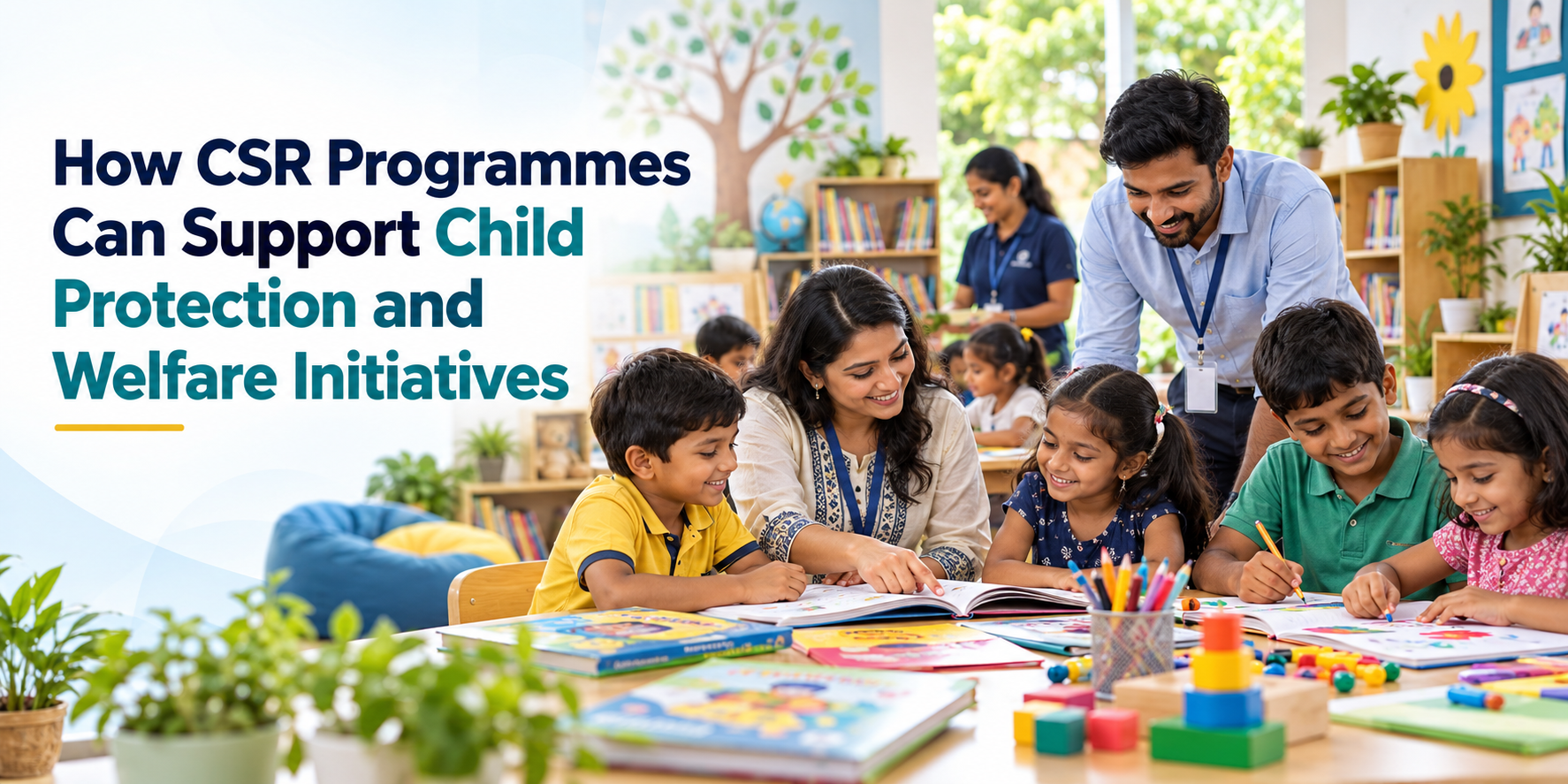
Children who are in poverty, neglected, and have limited access to education or unsafe environments may need a helping hand more than an extra dime. Programmes of corporate social responsibility can support child protection and welfare through the implementation of structured CSR programmes that tackle children’s education, health and protection and development. If planned and used properly, CSR resources can enhance the existing work carried out for children’s protection and their opportunities if the involvement of communities is included.
To Support Access to Education
Education is an important part of child welfare. Some children from vulnerable communities could be at disadvantage due to lack of financial means, lack of learning resources, and/or the responsibility of child support.
Learning materials, scholarships, digital materials, remedial classes and infrastructure improvements are some of the ways in which CSR programmes can contribute to education. Programmes may also include measures to tackle factors that increase the likelihood that children will drop out of school. Ongoing support may enable children to stay engaged in learning and learn skills for the future.
Improving Child Protection Systems
It’s not just about responding to the cases. Awareness, trained personnel, and avenues for identifying concerns and addressing them appropriately are needed in the communities.
CSR programmes can support awareness campaigns on child rights, bolster community-based measures to protect children and train individuals who have frequent contact with children. These activities may facilitate communities in identifying risks, and where concerns can be reported and/or referred for appropriate support.
Enhancing Health and Nutrition Services
Children’s health and nutrition are closely linked to their wellbeing and development. Some children in disadvantaged communities may not receive preventive health care or nutritional assistance or information about healthy nutrition.
Health screening programmes, nutrition awareness and awareness of health camps, and healthcare support are some of the ways in which CSR initiatives can help make a difference. Programmes may be designed to engage parents and carers, ensuring that children continue to benefit from health-related knowledge in the wider context.
Supporting Safe and Supportive Environments
Children require safe spaces in the home, school and community. CSR programmes may be part of the process of providing environments for children to learn, relate and access help and assistance without risk of their being abused, exploited or neglected.
This can include awareness raising, provision of communal areas for children, counselling services and training for adults caring for children. It is important that children’s safety and dignity are prioritised in the creation of environments.
Encouraging Community Participation
The involvement, empowerment, and engagement of families and communities deepens child protection efforts. Local stakeholders may have a better sense of social and economic issues that impact children and their ability to find practical solutions.
CSR programmes can assist in community meetings, awareness building sessions and in the development of partnerships with the community, parents and teachers to help promote child welfare. This can be useful in establishing a larger support system for children at risk.
Creating Long-Term Impact
Sometimes child welfare problems are not solved with short-term solutions. Long-term CSR programmes can offer continuity in monitoring progress, in identifying what additional needs are emerging and what adaptations of activities are needed.
Companies can collaborate with NGOs and community groups that have expertise and can help create programmes with well-defined goals, quantifiable results, and ongoing monitoring. These partnerships can support effective targeting of CSR resources to address real needs of the community.
Finally, CSR can help with child protection and welfare through education, health, safety, awareness and community-based activities. Corporate resources can be involved in continuous projects to provide safe and nurturing environments for children when programmes are planned for children’s needs and implemented with responsible partners.

