The implementation policy can be used to announce a company’s commitment to social responsibility, but a policy does not make a difference in and of itself. There’s a lot more work to do once plans get to the communities. It’s time now for companies to coordinate people, budgets, partners, activities, monitoring systems, and timelines in order to realise the goals of their CSR. Building a process to deliver, measure and improve social impact over time is more about the effective CSR implementation than just announcing an initiative.
Creating a Policy to a Practical Action Plan
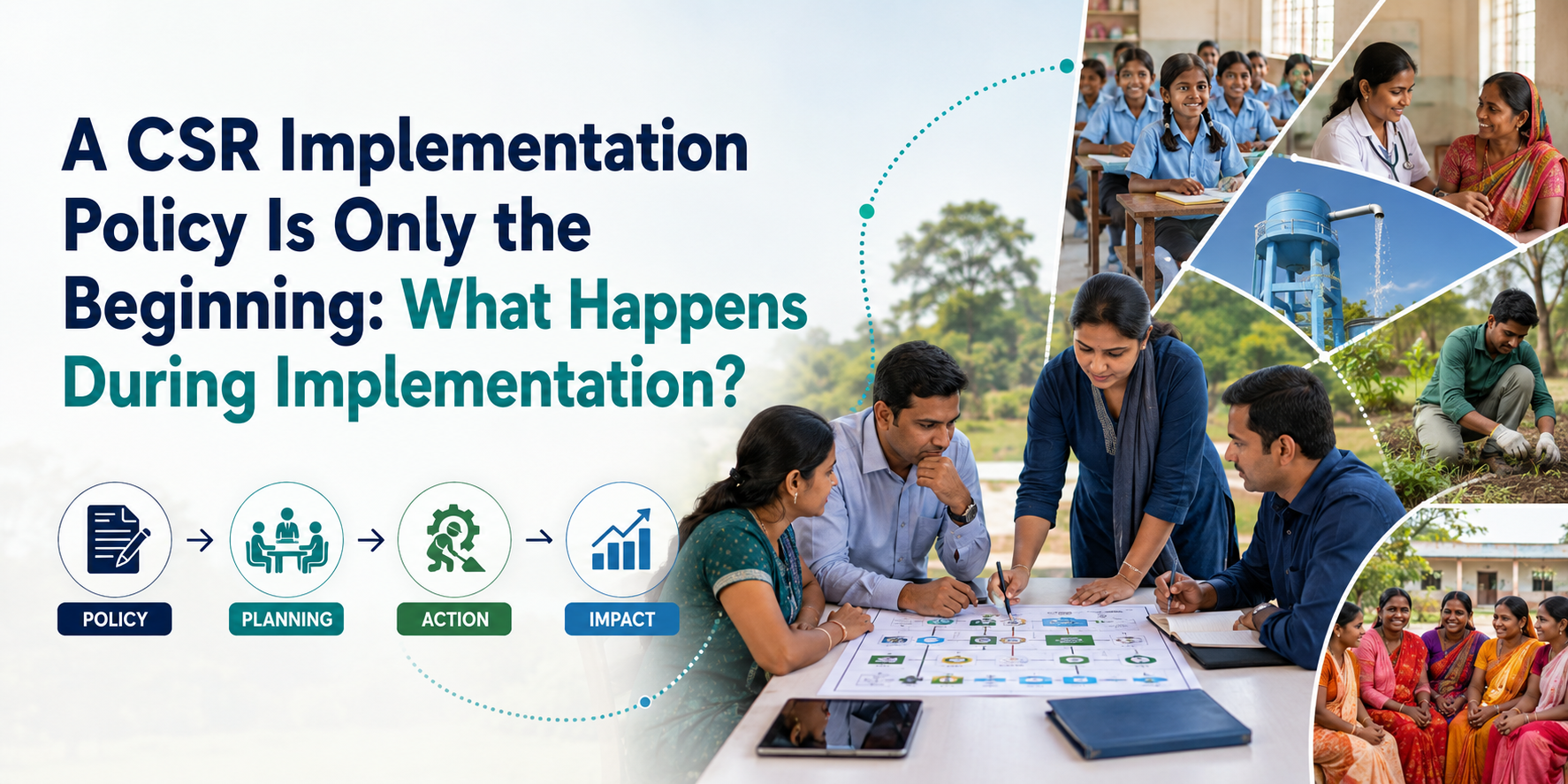
Generally a CSR policy is a policy that has high-level priorities and then those priorities need to be translated into action. The target beneficiaries, programme goals, activities, timelines, responsibilities and expected outcomes of the programme should be clearly defined.
For example, in the context of education, implementation might include remedial courses, learning evaluations, support for teachers, involvement of parents, and tracking attendance. Defining a broad goal into a series of activities facilitates the process of coordinating and evaluating CSR implementation.
Engage in community education
A programme that is poorly conceived because it doesn’t know what is needed locally can be difficult to achieve good outcomes from. Organisations need to undertake a community assessment, determine existing issues and challenges, and understand resources available prior to activities.
Community consultations and baseline assessments can be helpful in gaining insight into the needs of beneficiaries. This assists in making sure CSR resources are able to fill real-time gaps, and not just initiatives that seem to be a good fit on the surface.
Accessing places, people and activities
Sustainability by CSR (Social Responsibility) requires coordination between various stakeholders. This can involve employees, CSR staff, NGOs, field employees, local institutions, community members, and clients.
All stakeholders need to have well-defined roles. When implementation occurs at several sites, it is especially important to communicate well. The programme can be reviewed on a regular basis to determine if there are any delays, gaps in resources or changing needs within the community that may impact on the programme.
Making Budgets Work – Making Them Mean something
Providing a budget for CSR activities is just half the job done. The money must be translated into action to help achieve the aims of the programme.
It involves careful resource planning, procurement, staffing, logistics and timelines. Financial discipline also plays a role – if the use of resources is transparent, the stakeholders are more aware of how the resources are being used and if the spending is for the purpose it was allocated for.
Ongoing surveillance of what is really happening
Much of the work that is done to implement CSR is done once activities have started. Businesses should have systems in place for tracking participation, movement, spending and results.
Think of a Health Program. Attendees at a health camp can be counted, but may not provide an indication of whether or not they got subsequent care – or whether awareness was raised. Activity-based indicators when used in conjunction with outcome-based indicators yield a more useful perspective on programme performance.
Give students opportunities to learn, adapt and improve
There is no no-fly list when it comes to the CSR programme. Adjustments might be needed due to unexpected challenges, changing community needs or below expectations participation.
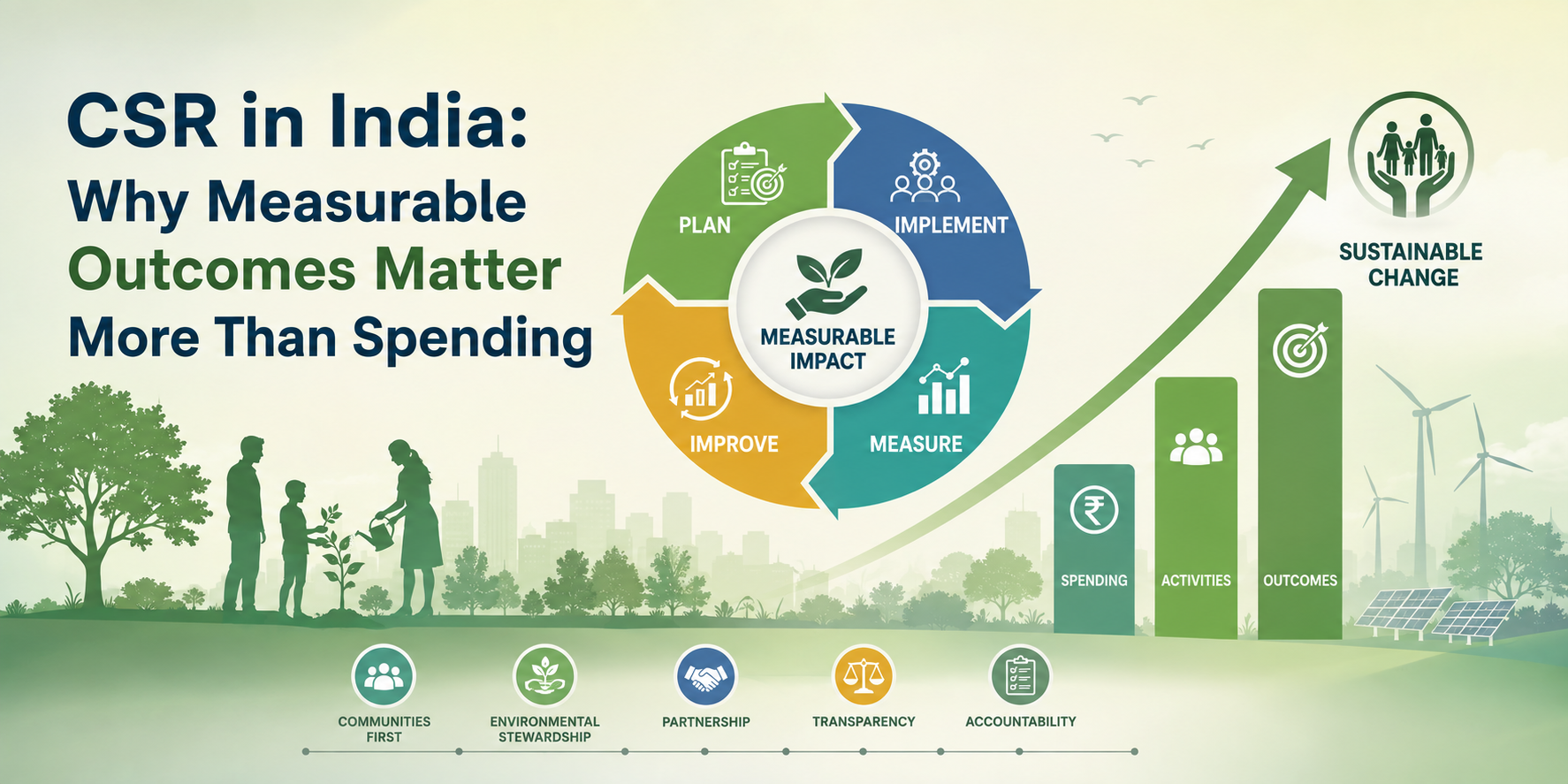
Monitoring and feedback enable organizations to determine what works best. This will make CSR implementation a process of planning, doing, learning and adapting instead of a one-off activity.
Programmes can be more responsive and sustainable when companies see implementation as a learning process.
Conclusion
A CSR policy gives direction but the implementation is what can make it action. Thoughtful planning, community understanding, coordinate of stakeholders, responsible resource management, and continuous measurement of the CSR process are crucial to its effective implementation. Good CSR programmes are not just those with good policies, but those that are flexible enough to work out in the field and show evidence of results. The process of policy to impact starts when organisations go beyond declarations and start working on where CSR implementation is most needed – the community.