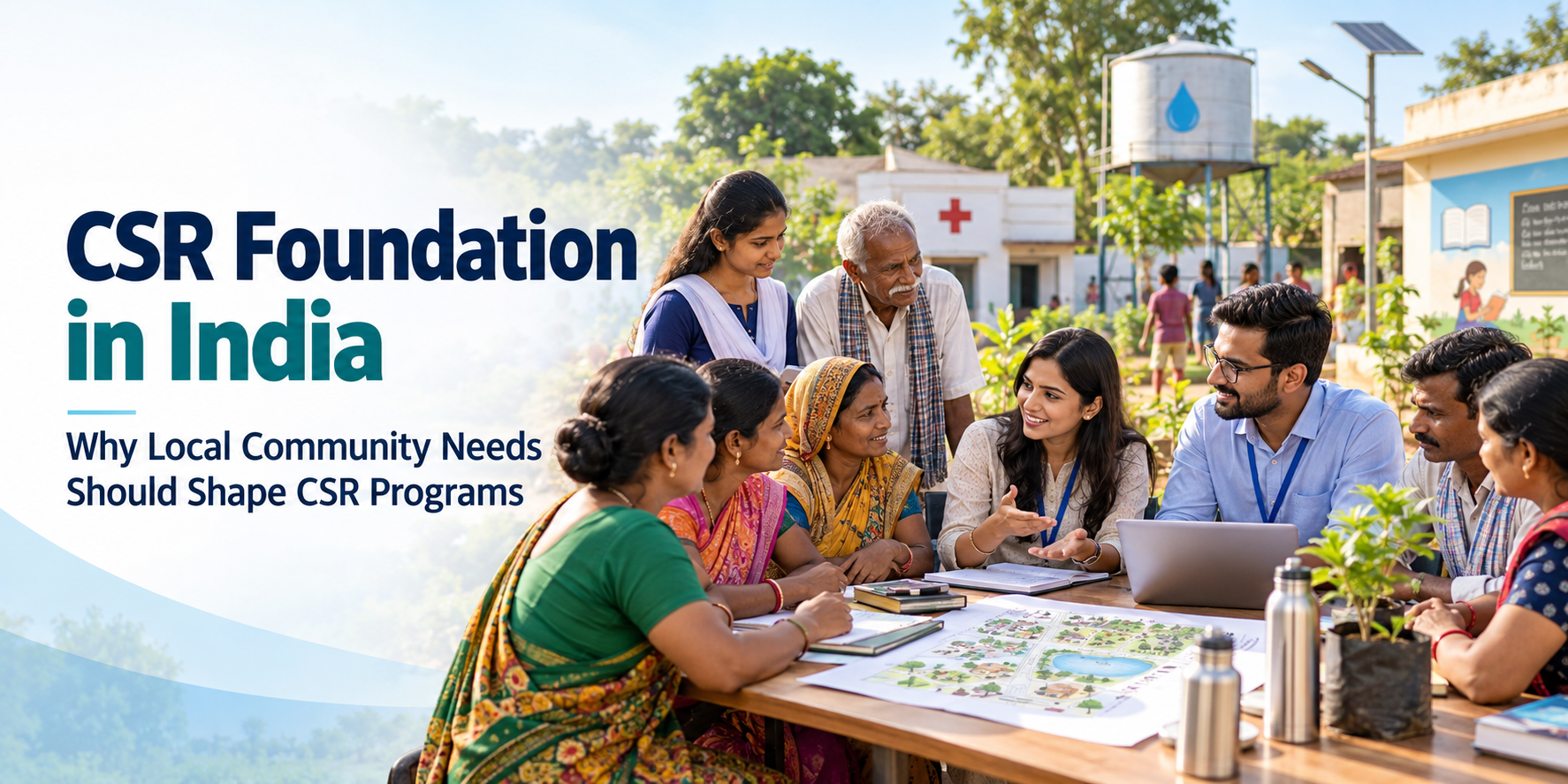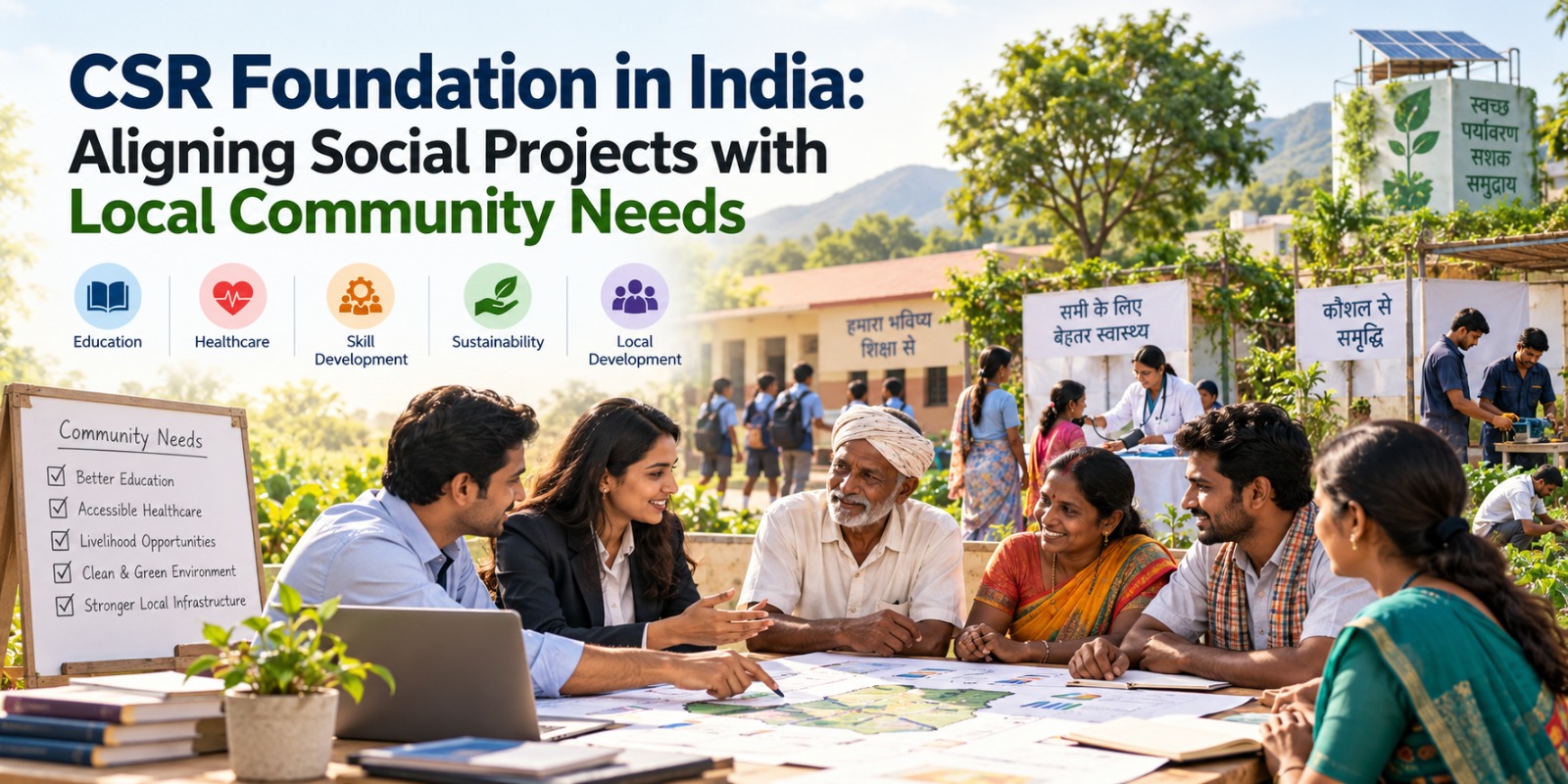
When corporate social responsibility (CSR) programmes target the needs of the communities they seek to serve, they can make a significant contribution to a positive social development. Funding is a significant component of these programs, but projects can be funded, planned, and implemented well—or not. There are several areas, such as education, healthcare, conservation efforts for the environment, and livelihood programs, where a CSR foundation in India can make a significant impact on the well-being of the community.
Researching the Needs of the Community Prior to Project Planning
Each community has its own set of issues. A town or country area could be in need of improved access to healthcare, clean drinking water, or vocational training, and a neighbourhood in the city could need educational support or programs for vulnerable families. The same solutions used throughout can result in projects falling short of the most important issues.
Organisations should undertake community assessments prior to the implementation of an initiative to gain insight into identified community needs, resources and gaps in services. Speaking to community members, local institutions, community leaders and NGO’s can be helpful.
This information can be used to inform a CSR foundation in India of the areas that are in need and make sure that any projects they are thinking about are not based on assumptions. This also enables the use of the resources in an effective manner by organisations.
Engaging Communities in the Design of Projects
Involving the community in the development of relevant and sustainable social programmes is a prerequisite. Those who have encountered local issues themselves may have a better understanding of the problems they encounter and what may work in their context.
Discussions with teachers, parents and students can, for instance, be included as part of an education initiative to uncover school attendance, learning resources, or access to digital resources are among the barriers. Likewise, a health programme can also include local health workers to gain awareness of areas that need improvement in awareness, screening, and access to health services.
Involving beneficiaries during planning and implementation encourages accountability and helps build trust. It can also enhance participation as community members are more likely to participate in programmes that meet their priorities.
Selecting the Appropriate Areas in which to Invest Socially
Clear, attainable goals and results are essential to the CSR projects. Programs can be targeted to the needs of the community, such as:
Education: assistance in learning support, digital literacy, school infrastructure, programmes supporting the reduction of barriers to learning.
Healthcare: promoting health awareness, preventive screening, access to basic health services and infrastructure developments in the community.
Skill development: Vocational training which is in line with the employment opportunities and industry needs of the locality.
Environmental sustainability: Promoting water conservation, waste, biodiversity and other local environmental issues.
It is important for a CSR foundation in India to understand if the proposed activities are in line with the applicable CSR requirements under the Companies Act, 2013 and relevant rules. Legal eligibility and implementation arrangements should be checked prior to committing funds.
Evaluating impact after the project has ended
Activities and/or use of allocated funds does not mean that a project has met its desired outcomes. There is a need for organisations to have a set of indicators to measure the impact of their efforts.
These could be indicators for an education programme such as attendance, progress in learning or retention. Healthcare projects could consider monitoring participation in screening, awareness levels or successful screening referrals. Feedback from beneficiaries can add more context related to the effectiveness of the programme.
Organizations could also make corrections through regular monitoring of what is required if there are any gaps in implementation. Another thing that businesses can benefit from is transparency in reporting, as they would be able to track how they use their CSR funds and see the outcomes.
Conclusion
In order to incorporate social projects in the requirements of local communities, there should be done research, involvement, planning, and monitoring. Businesses can develop initiatives dealing with real problems and ensuring sustainable development with the help of the CSR foundation in India. Organizations would be able to listen to communities, set achievable goals and measure results.