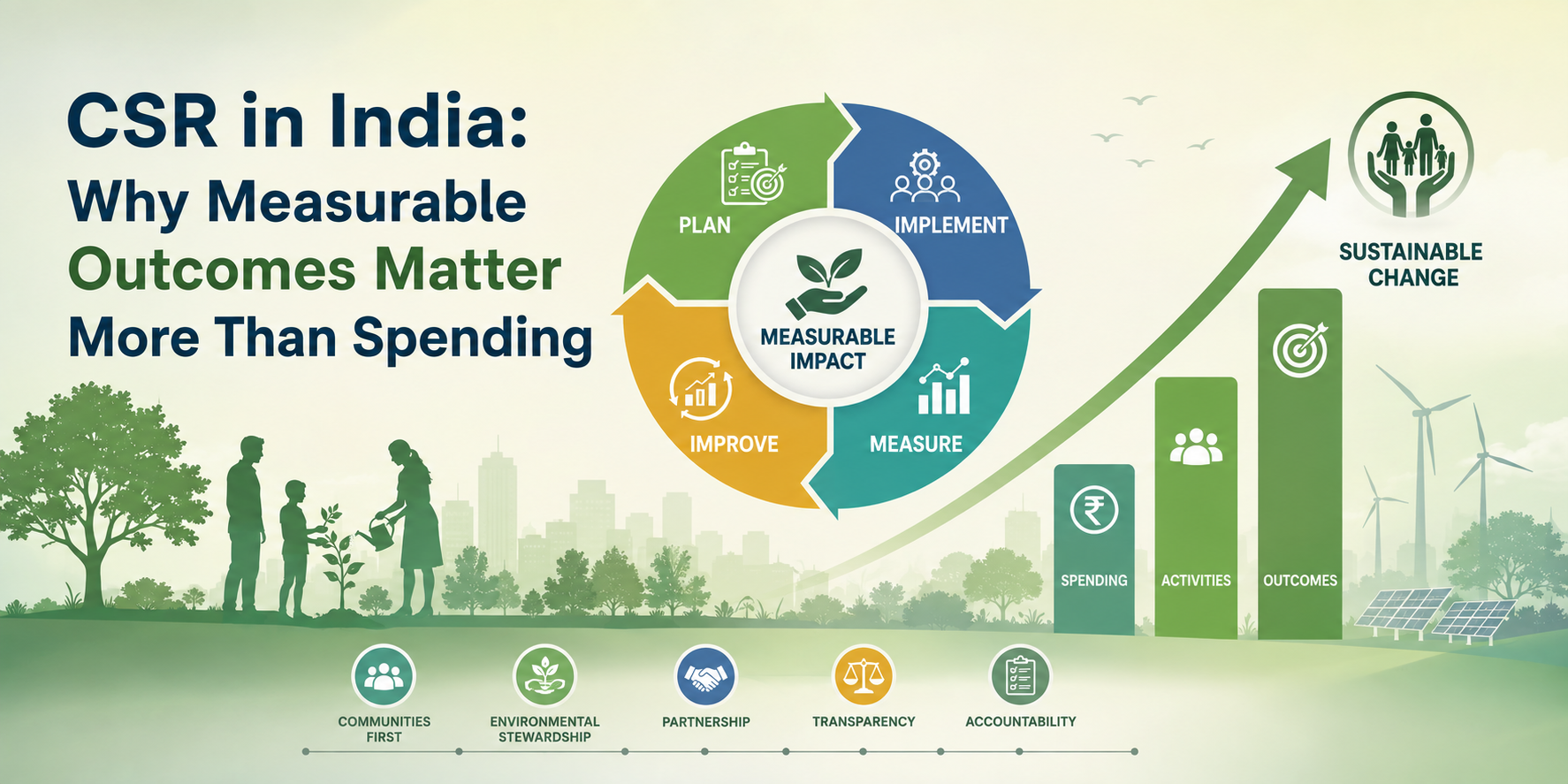
Implementation of CSR is best accomplished by making a difference in the real world, not by simply having policies or statements on paper. Herein lies the importance of CSR implementation. An effective cycle of implementation allows corporations to develop social projects into reality, track their success and improve their performance over time. However, a process consisting of planning, implementation, measurement and improvement of the project may be employed to produce meaningful, accountable and sustainable programmes.
Plan: Begin with the Right Intentions
The main component of any successful CSR initiative is proper planning. Businesses should be familiar with the social or environmental problem they wish to tackle and know who the communities are that need support. This can be related to areas like education, healthcare, skill development, women empowerment, sanitation, environmental protection or livelihood generation.
At this point, organisations need to set out clear goals, select beneficiaries, set timelines and allocate resources. Local needs are also important as a programme that does not take into account the local needs may not be able to tackle the actual need of the community.
If a strong plan is created then it becomes easier to make sure that the CSR project is doing what it is supposed to do and it can guide the whole process of CSR implementation.
Execute: Turn Plans Into Action
After the strategy is in place, it’s time for execution. This is where CSR programmes shift from plans to action.
Companies can cooperate with existing NGOs, community groups or other implementation partners delivering projects. Clear ownership, right resources and frequent communication among stakeholders are essential to good execution.
For instance, an education programme can include the establishment of learning centres, the provision of remedial education or training teachers. Vocational training and mentoring and employment support may be part of a livelihood programme.
However, it takes more than launching activities, it depends on ensuring that they are effectively reaching the intended beneficiaries for successful CSR implementation.
Measure: Understand What Changed
Measurement provides an organisation with a sense of how effective its CSR work is. There is no simple correlation between expenditure and impact, nor between number of activities and impact.
Instead, companies can set up indicators relevant to programme aims. Attendance, improvement in learning or retention in school could all be measured in an education project. A livelihood project could monitor skills used or employment, or income generated.
It is important to monitor regularly and identify progress and gaps. It offers organisations with evidence that can feed into future decision making and adds to transparency across the stakeholder group.
Improve: Learn and Adapt
The last step in the cycle is improvement. It is rare that CSR programmes are entirely appropriate to evolving community needs. LEARNING from feedback, monitoring data, and field experiences can identify opportunities for delivery to be improved.
Organisations can review the factors and make changes to the programme if it is not delivering the desired outcomes. This may include alterations to training approaches, increasing beneficiary participation, adjustments to timing and/or partnerships.
This on-going learning helps to bring implementation of CSR to be more responsive and sustainable. Companies don’t have to repeat the same activities annually, but can draw on the experience gained and refine programmes to improve their effectiveness.
Creating a Continuous Cycle of Impact
The four stages: plan, execute, measure, improve are not discrete steps but are interdependent. Planning sets direction, programme provides execution, measurement provides evaluation and improvement strengthens the next programme.
Ultimately for companies that want to make a difference, CSR is about developing a process that can adapt to the needs of the community. If CSR implementation is viewed as a continuous effort rather than a one-off responsibility, the company will be able to use its resources more effectively and social programs will yield more lasting results.
This transforms CSR from merely being a good thing to being a good thing done strategically, responsibly and measurably.