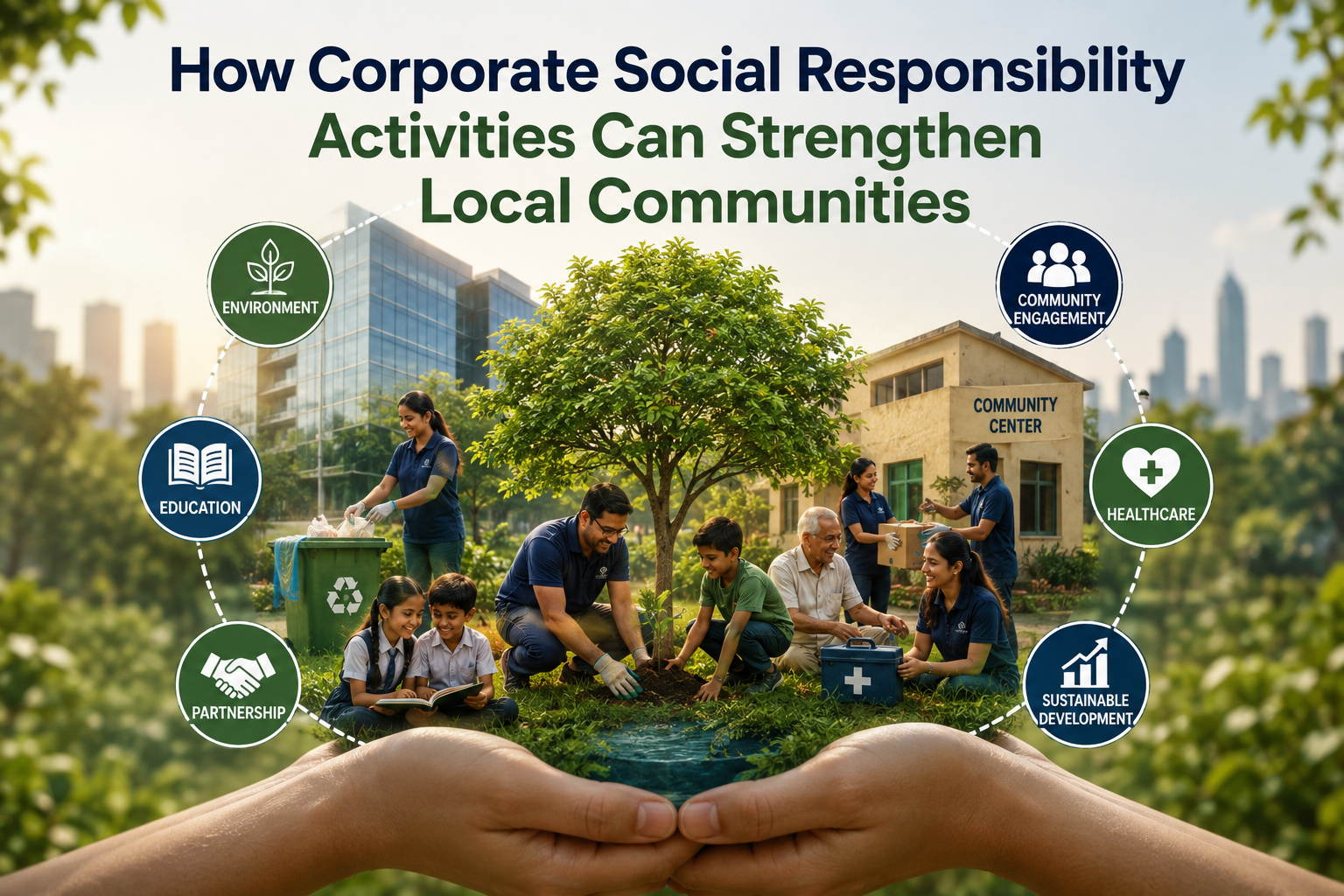
There is close linkage between businesses and the communities in which they operate. They can provide jobs, serve the local community and help drive local economy. But communities can also have learning, health, competency, housing, income-generation and access to basic services issues. Some of these needs can be fulfilled through well-planned corporate social responsibility activities, which are also a way to engage companies in the process of community development.
Supporting Education and Learning
One area where long-term benefits can be realized is that of education. Companies can support schools, provide learning resources, offer remedial education and support children who have limited access to education.
Digital literacy and skill development of young people can also be the subject of CSR programmes. These types of efforts can help people acquire information and skills that can enhance their future prospects.
To create enhanced access to healthcare.
Support in the healthcare domain is another crucial community-based intervention. Health camps, awareness programmes and screening initiatives can be organised in collaboration with qualified organisations by companies.
These types of programmes could educate people to the importance of preventive health and the services available to them in their community in which they are unable to get health care. Programs focused on nutrition, maternal health, sanitation and hygiene have the potential to respond to practical community needs.
Creating Livelihood Opportunities
The stronger a community is, the more opportunities it has to create stable incomes. The corporate social responsibility activities can facilitate vocational training programmes, entrepreneurship programmes and skill development for employment.
The training should be tailored to opportunities and market needs in the local context. Programmes can, for instance, emphasise on skills that will enable the participants to find a job or set up a small business. Such programs can be even more effective when mentoring is continued.
Promoting Women’s Empowerment
There are barriers to women’s education, employment, financial independence, access to resources, etc. CSR programmes can solve these problems by providing literacy programmes, vocational training, entrepreneurship support and awareness programmes etc.
Providing women with skills and the opportunity to join income-generating activities can have a positive impact on not only individual families, but also the community. Additional financial involvement may also help to create household security.
Improving Community Infrastructure
For some communities, there is a need for support in basic infrastructure and basic facilities. Companies can donate to sanitation, clean drinking water, waste management, community facilities, environmental improvement, as per identified requirements.
Programmes that are based on local assessments and involve community participation are most effective. The needs of residents can be understood to avoid resources being spent on projects with little practical application.
Encouraging Community Participation
Local people should not be regarded as beneficiaries in successful community development. They can be involved in the companies’ programme design and help them to understand local priorities.
Community members can be engaged in discussions, programme planning and feedback in companies/organising bodies. This can also help individuals feel more responsible for the programs when external involvement is decreased.
Measuring the Results
The effectiveness of corporate social responsibility programs should be measured by results, not just by the number of corporate social responsibility activities or the cost of the event.
Companies can monitor variables like number of students supported, number of people trained, healthcare services provided, women engaged in livelihood programs, households using community facilities etc. Once a programme has been implemented, the feedback from beneficiaries can give further indication whether or not the programme is having a positive impact.
Volunteer to help improve the community by working with the school district.
CSR can play a more significant role if businesses take a strategic view of community development with well-defined goals and an understanding of the local context and a sense of time. Specific programmes can have real-life impacts in education, healthcare, livelihoods and women’s empowerment and the infrastructure sector.
Conclusion
Finally, corporate social responsibility activities can contribute to the improvement and reinforcement of the local community by linking corporate resources to a social need. With effective implementation partners, community engagement, and outcome measurement, CSR can take a step beyond short-term support and help foster community sustainability.