The increasing number of workers in India offers many possibilities; however, it also shows the need for quality skill development and job creation. There is a need for young people, particularly those from disadvantaged backgrounds, to get skills training, career counseling, and education relevant to the industry to obtain jobs that matter. This is where CSR activities come in as a very significant tool for development. By engaging in skill development activities, organizations play an active role in reducing the divide between education and employment in addition to helping contribute to national development.
The Growing Importance of Skill Development
With technological advancements and changes in market needs, organizations are looking for candidates who possess practical skills rather than just theoretical knowledge. Nevertheless, most of the job seekers do not have access to proper training and exposure. The concept of corporate social responsibility deals with this issue by contributing to the development of vocational institutes, computer education, business education, and technical education.
How Corporate Social Responsibility Encourages Employment
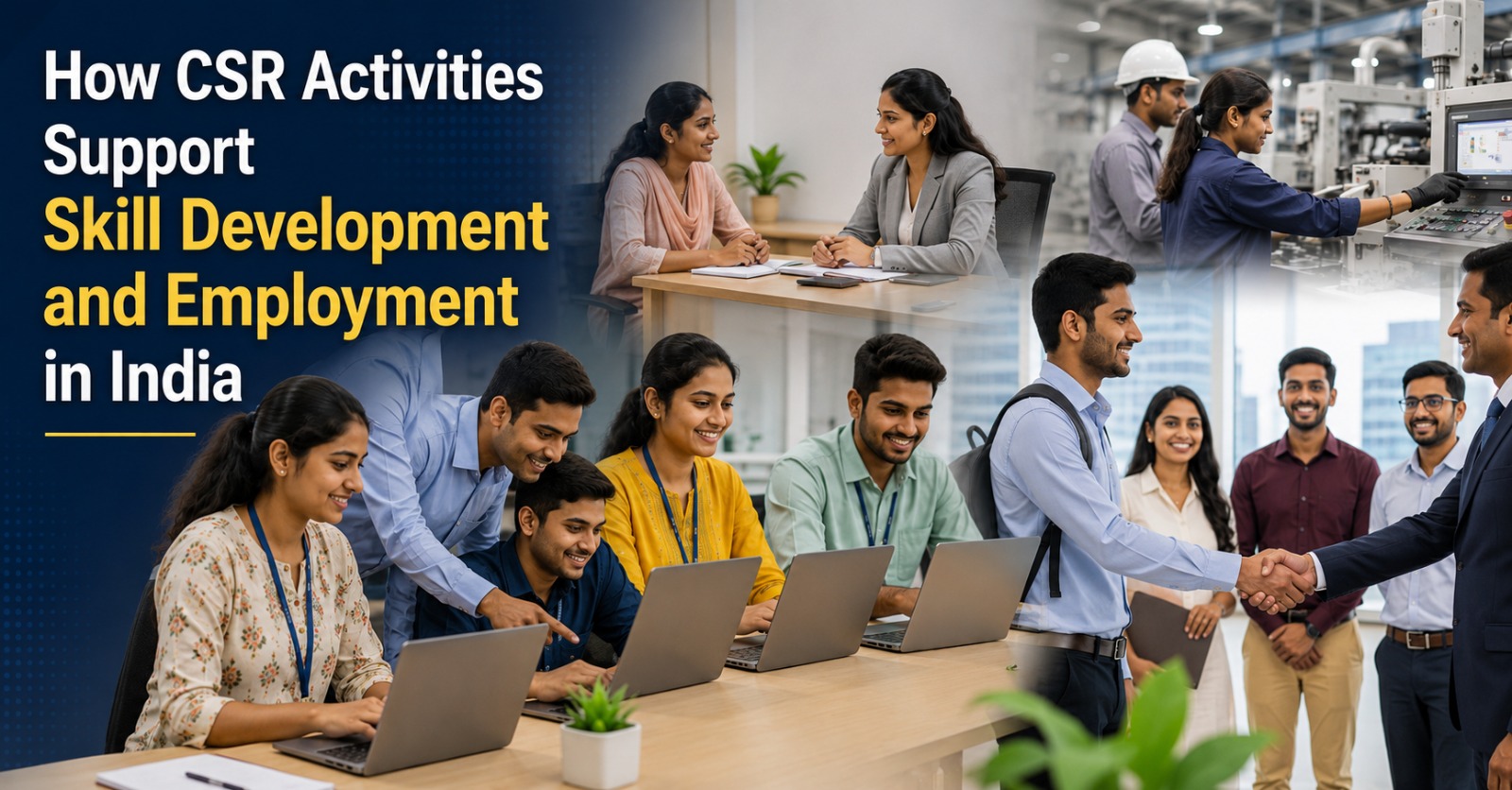
One of the best contributions of CSR Activities is opening up opportunities for employment. Several companies work along with schools, NGOs, and training institutes for developing a program according to the demands of the industries.
Participants not only learn practical skills, but they also get certifications and develop soft skills including communication skills, team-working skills, and problem-solving skills.
Several companies even make an arrangement of placements in companies, thus offering better chances to participants for finding job opportunities.
Supporting Rural and Underserved Communities
Many skills development projects that are carried out via corporate social responsibility are geared toward rural areas and economically underprivileged communities. Through such programs, individuals lacking access to education and employment opportunities can become empowered.
Typical components of skills development programs include:
- Skills development for manufacturing, healthcare, retail, and hospitality sectors
- Computer and digital education
- Entrepreneurship programs for women and self-employment programs
- Financial literacy and career guidance
- Youth and disabled skills development
Such approaches help foster sustainable development in an inclusive manner.
Building Industry-Relevant Skills
In today’s business world, employers demand workers who can adjust to new technology trends and evolving business settings. In many cases, CSR-sponsored education initiatives often focus on hands-on learning through seminars, internships, and other real-world experiences. Classes in information technology, alternative energy sources, logistics, healthcare, and manufacturing prepare participants to learn skills required by the industry.
Moreover, continuous learning motivates individuals to improve their skills, making them more employable in the long run.
Long-Term Benefits for Society and Businesses
The investments in the development of the workforce provide for both the community and the organization in terms of positive effects. First of all, educated individuals earn money to support themselves and their families and become more productive in their work. At the same time, organizations receive a qualified and productive workforce and have good relationships with the communities they work with.
In addition to that, these projects help the country to solve its problems connected with unemployment and entrepreneurship, gender equality, etc.
Conclusion
CSR Activities play an important part, not only in donation but also in creating chances which would change people’s lives for the better, through educating and training people and providing employment to them. By helping develop skills, companies ensure that people have a sustainable career ahead of them and at the same time help in building the economy of India. With increasing cooperation between companies, institutes, and communities, corporate social responsibility in skill development will continue to be a potent tool.