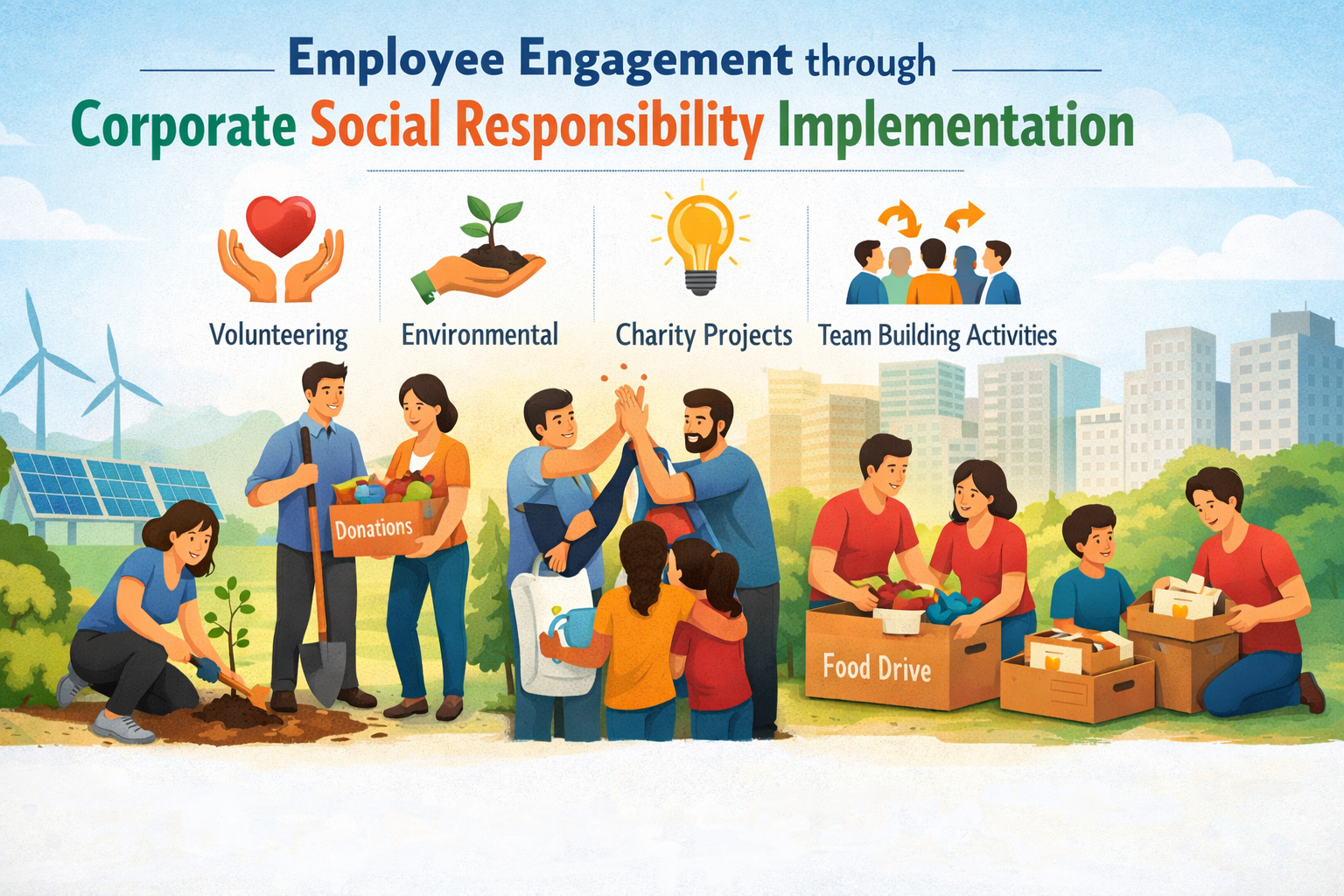
Engagement of employees is one of the elements of the creation of a productive and motivated workforce. The current organizations have realized that employees seek to be employed in companies that make a positive contribution to the society. Corporate social responsibility implementation is one of the best approaches to this as it would motivate employees to engage in activities that are beneficial to communities and the environment.
Employees get to feel more associated to the mission and values of their organization when they are engaged in significant CSR activities. This involvement brings about increased motivation, enhanced teamwork and good working culture.
Creating a Sense of Purpose
Contemporary workers are likely to desire something beyond monetary pay in their jobs. By undertaking corporate social responsibility, the companies give their employees a chance to give back to the society in activities that generate social value.
Volunteering programs, community development programs and other environmental campaigns enable employees to realize that their efforts make a difference. This is a sense of purpose which builds their emotional attachment to the organization.
Promoting Cooperation and Teamwork
CSR programs usually entail participation in groups, and this assists employees to work together beyond their job descriptions. In the process of implementing corporate social responsibility, workers can collaborate in the volunteering efforts, raising funds, or in community work.
Such experiences promote effective communication and collaboration that makes employees establish more positive relations with their colleagues.
Enhancing Work Culture
Any organization, which actively encourages social responsibility, is likely to propagate such values like empathy, accountability, and community engagement. These values can be included in the daily work culture of the company through the implementation of corporate social responsibility.
This makes the employees in such an environment proud of their organization and are more inclined to make the organization successful.
Participation and Support of Leadership
Successful CSR initiatives are relevant to leadership involvement. When leaders in the company are actively involved in the CSR programs, they will show their social responsibility towards the organization.
Observable top management involvement in the implementation of the corporate social responsibility would attract employees to participate in the corporate social responsibility initiatives and enhance trust in the organization.
Development of Skills and Learning Opportunities
Professional development may also be achieved through participation in CSR programs. Planning, communication and coordination are some of the CSR activities that assist employees in acquiring new skills.
Corporate social responsibility implementation will provide employees with an opportunity to learn the principles of teamwork, third-party management, and leadership and develop the skills to work on the meaningful causes.
Rewarding the Employee Contributions
Employee recognition in CSR activities also serves to keep up the motivation. When companies value individual effort of employees in the course of implementing corporate social responsibility, they do so to establish a good culture of social responsibility.
More employees can be motivated to participate in future programs through recognition programs, internal communication, and appreciation events.
Conclusion
One of the significant positive effects of proper implementation of corporate social responsibility is the involvement of employees. Inclusion of employees in social and community activities helps companies to establish a work environment whereby individuals feel respected, encouraged, and feel that they are part and parcel of a bigger cause. CSR is not only a good program to benefit the society, but also to enhance teamwork, culture of work and overall performance in the organization. By taming corporate social responsibility, the business might develop more active human resources and at the same time contribute to the society.